The Project
Routes of Memory: Beirut As You’ve Never Seen It Before – The World’s First Memory Tour
In a globally unique experience, the “Routes of Memory” project offers a dual journey through the city of Beirut. It combines a live tour aboard an international sightseeing bus with a digital platform — www.routesofmemory.org — that deeply explores the city’s collective memory. This is not just a conventional tourist experience. It is an open invitation to new generations of Lebanese, as well as tourists and visitors, to immerse themselves in Beirut’s living history. As the bus travels through the city’s streets, it stops at key landmarks, offering audio narratives that document the pivotal events these locations have witnessed , from the civil war to the Beirut port explosion. The “Routes of Memory” website serves as an interactive digital platform, presenting the same narratives through a dynamic map that identifies significant sites and historical events. It is enriched with references, links, and recommended readings for those who wish to explore further. Born out of a recognition of the need to transmit memory and address the knowledge gap among tourists and post-war generations, this innovative tour combines physical exploration with in-depth digital storytelling. It brings together field discovery and online engagement to highlight the city’s layered geography and its impact on Beirut’s social fabric. “Routes of Memory” is more than documentation; it is a living dialogue between past and present. It contributes to building a shared collective memory that honors the victims of the past and sparks critical conversations about the future. This initiative is brought to life by the Socio-Economic Justice Initiative – MAAN and ACT for the Disappeared, two organizations committed to the causes of memory and justice in Lebanon. This work would not have been possible without the invaluable network of partnerships that supported it. We extend our sincere thanks to Ms. Viviane Nassar, Director of City Sightseeing Lebanon, whose role was essential to the success of this project. We also express deep gratitude to AMIDEAST, the French Cultural Center, and the Cervantes Institute of Spain for their meaningful collaboration, which enabled us to bring these narratives to a global audience in three languages: English, French, and Spanish.
Beirut
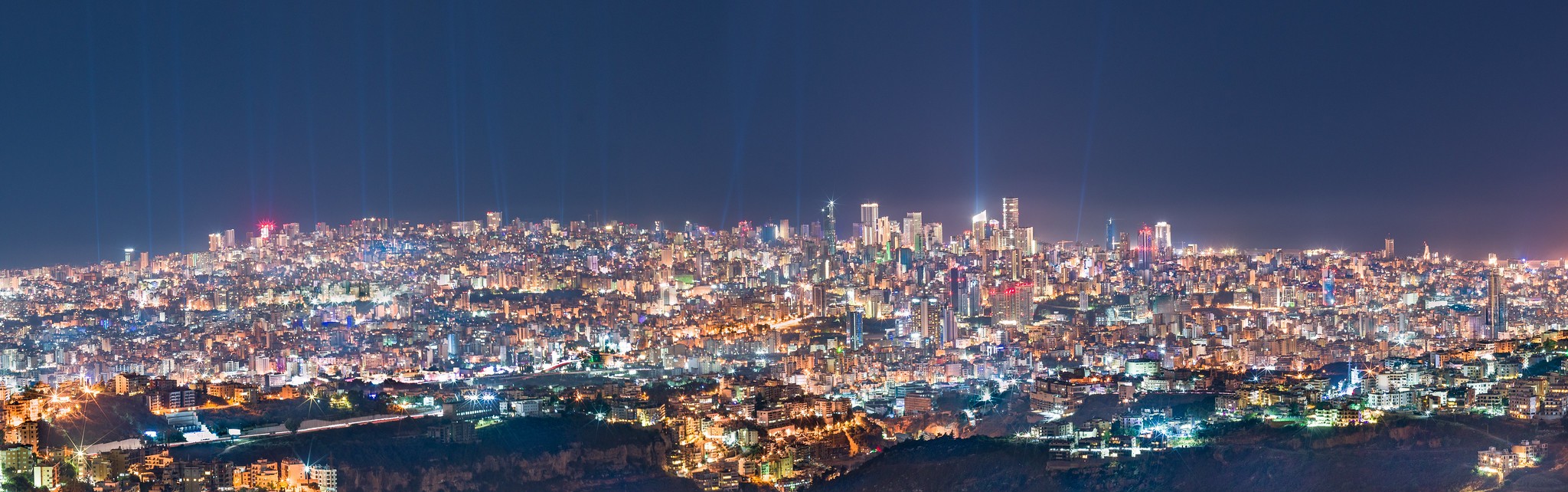
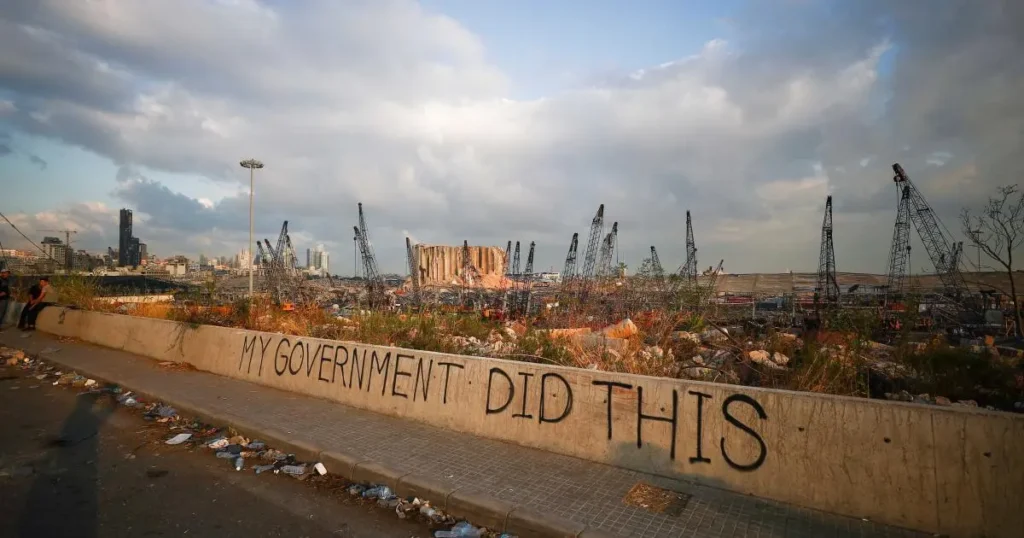
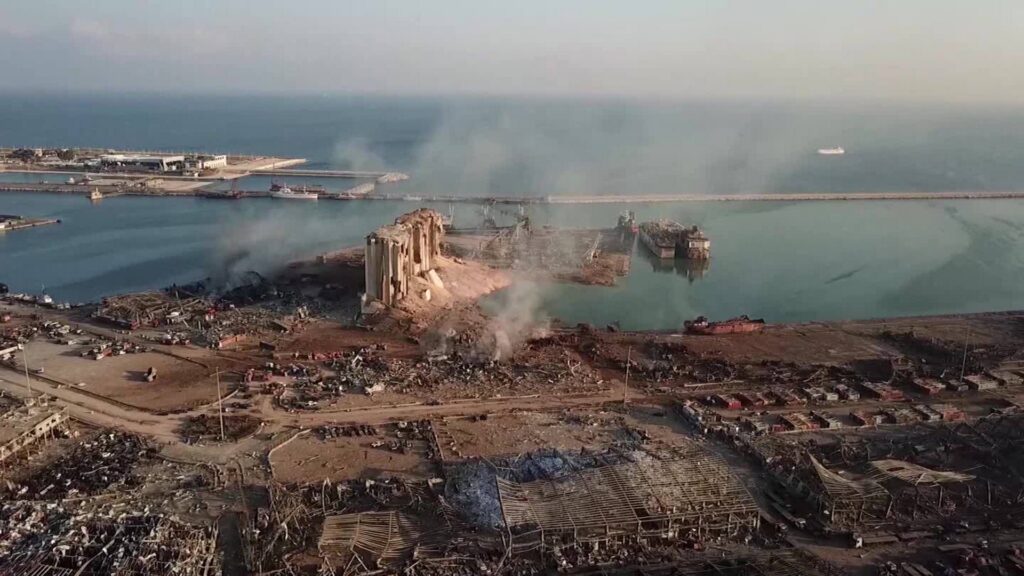
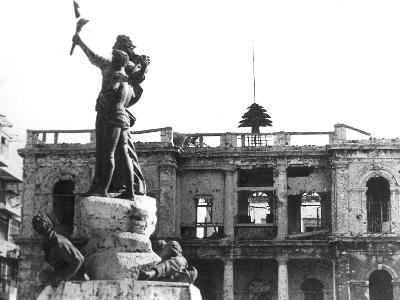
It is wonderful to have you join this journey through the neighborhoods of Beirut, to see its contemporary history and listen to stories from its memory . Beirut , which first emerged in the Stone Age when the sea receded slightly, has remained like a boat in a sea that sometimes calms and sometimes rages. Despite the wall that the Canaanites built around it, which was destroyed and was rebuilt many times, and its map changing but remaining until the late Ottoman period , Beirut did not remain isolated. Its port became active in transporting goods, and more importantly, it served as a point of connection between the peoples of the world. After it was declared the capital of the State of Greater Lebanon (on 1 September 1920), and despite the series of political and security events it witnessed, both interior and exterior, along with demographic, social, economic, and cultural transformations, Beirut became the story of a nation. Therefore, this tour is a journey into that story. And within the story, you will find how revival intertwined with crises, peace with war, construction with destruction, openness with isolation, unity with fragmentation, the state with chaos, independence with dependency, sovereignty with occupation, prosperity with misery, truth with concealment, memory with oblivion, and the past with the present and the future. And because the stops on our tour witnessed events during the war (1975-1990), we have been careful not to take sides with any of the parties that fought, nor to adopt one narrative over another. Regardless of whether we have succeeded in that or not, because the matter is relative, we repeat, with historian Kamal Salibi , the call for the Lebanese to clear their homes of cobwebs and to rewrite their history using scientific methodologies, away from grudges, justifications, and condemnations. We also add Georges Corm’s call to free ourselves from prejudices and to transcend the “culture of discord,” in pursuit of a “national culture.” And as we crossed minefields, checkpoints, and frontlines, we made sure to preserve what is positive, bright, and beautiful in our society, our culture, our values, our capital, and in our past, future, and present. The hope, as always, remains in knowledge and awareness.
Partners

MAAN is an independent, Lebanese, non-profit non-governmental think and act tank working across all Lebanese territories, established in 2018. MAAN aims to bridge inequalities within Lebanon through the promotion of a culture of citizen accountability, the production of qualitative and quantitative evidence- based research, and advocacy for stronger institutions and social protection. With this, MAAN aims to reform socio-economic policy through a rights-based approach and acting as a catalyst between grassroots groups and policy makers. MAAN born at a time where international organizations are directing their attention to social equality, accountability, and governance, our Socio-economic Justice Initiative (acronymed MAAN for the Arabic term meaning “together”), will target Lebanese citizens, and in specific youth, to build a popular and public movement advocating for socio-economic changes through policy development. This document introduces the relevance and need for MAAN as an active organization, as well as the benefits and necessity of youth engagement. Furthermore, MAAN presents its early strategy to obtaining socio-economic justice by offering its mission, vision, and pillars of action that will be reflected through all of MAANs initiatives from the outset.
ACT for the Disappeared is a Lebanese human rights organization founded in 2010 that works on dealing with the past and addressing the legacy of political violence to advance peacebuilding in Lebanon. It focuses on fostering social cohesion, promoting acknowledgment, and strengthening public responsibility for the past. Its work tackles the consequences of conflict, including the issue of missing and forcibly disappeared persons, as part of a broader effort to support affected communities and promote collective engagement with historical injustices. ACT engages in documentation, advocacy, memorialization, and dialogue-based initiatives aimed at reshaping how Lebanon relates to its history. Since its founding, the organization has built one of the country’s most comprehensive databases on enforced disappearances and conflict-related events, laying the groundwork for justice, recognition, and long-term reconciliation. Over the years, ACT has developed initiatives across several fields. It has engaged in advocacy with families and civil society to push for the establishment of a national investigative mechanism on the fate of the missing. It has provided psychosocial support and memorialization programs for affected communities, including families of the missing, to help process trauma and preserve memory. ACT has also created digital platforms such as Waynoun, which provides objective information on missing and forcibly disappeared persons, and Space for Hope, which shares personal stories alongside an interactive “map of memory.” In addition, the organization has contributed to research and policy development, including the creation of national guidelines for preserving gravesites and a study on trauma-sensitive truth-seeking. Its public outreach efforts include village visits, university events, podcasts, and intergenerational dialogue sessions—particularly with youth—to deepen engagement with the legacies of political violence. ACT’s work reflects a sustained commitment to making the legacy of the past a matter of public concern and collective responsibility. By centering victims, involving communities, and bridging generations, ACT aims to transform how Lebanon relates to its past in the pursuit of a more just and peaceful society.
City Sightseeing Lebanon is the official franchisee of City Sightseeing Worldwide, the world’s leading open-top bus tour operator present in over 140 cities. We operate our official Hop On Hop Off Beirut tour, offering visitors and locals a unique way to discover the capital’s historical and cultural landmarks. In addition to Beirut, we also organize tours all over Lebanon, from the North to the South and the Bekaa Valley. Our services include: Private tours for families, students, embassies, and corporate groups Custom experiences: Birthdays, team-building, school outings, and themed celebrations Advertising opportunities: Eye-catching branding on our iconic red double-decker buses and digital exposure through our platforms. City Sightseeing Lebanon is proud to partner with MAA & ACT FOR DISAPPEARED to launch a Special Beirut Tour highlighting the main historical stops that shaped Lebanon’s history.