
Martyrs’ Square: The Martyred Square
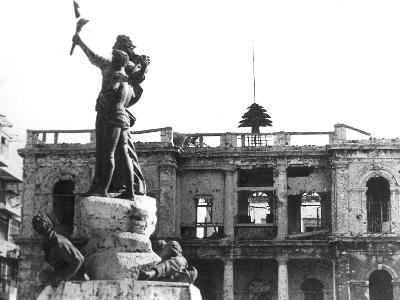
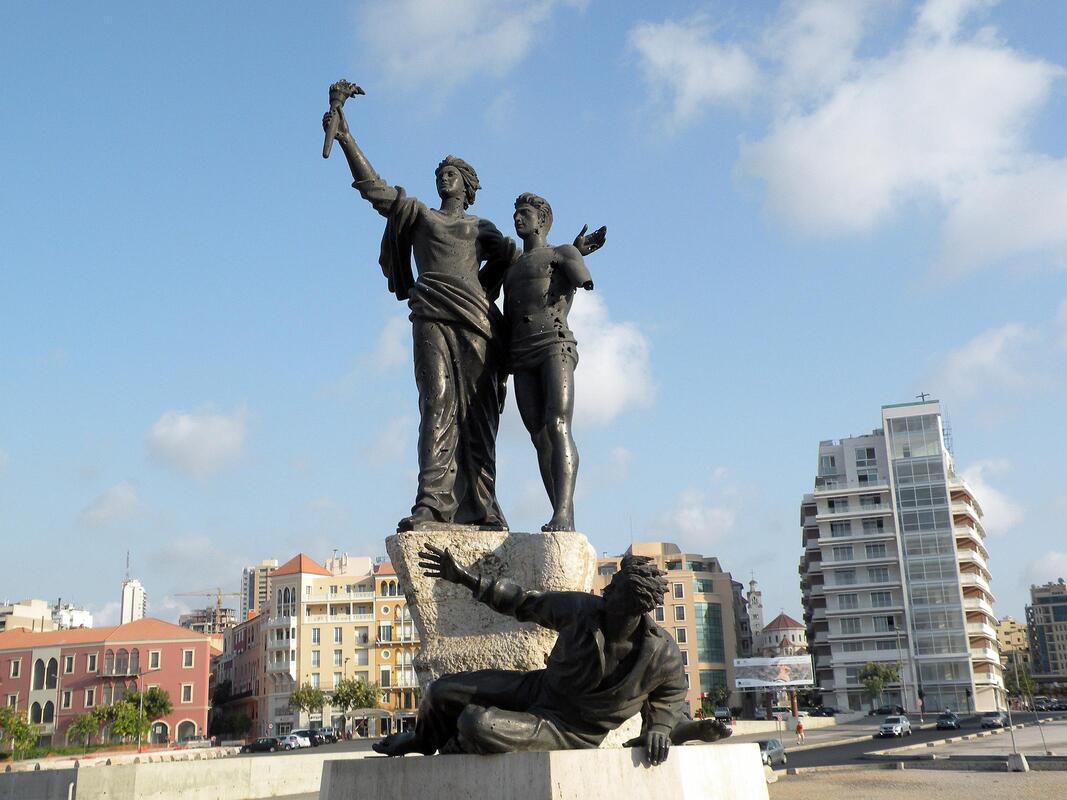
This square has a story that began with joy and turned into sorrow. For the square did not only become Martyrs’ Square , but, as Ghassan Tueni said, it became “the martyred square.” The entire square, not just the Martyrs’ statue that stands at its center, became a symbol of martyrdom, after once being a model of ambition and openness. It is the first public space in the modern history of Beirut. Before that, the residents of Beirut had only two small squares . Thus, they rejoiced when it was created. It was spontaneously named Burj Square because it bordered the southern side of the tower overlooking the sea. Then, official interest in it began to grow. In 1888, the municipality turned it into a garden. And while it became a station for travelers, street vendors found in it their marketplace. But the Ottoman governor, Djemal Pasha, changed its destiny when he executed Lebanese, Syrians, and Palestinians there who were demanding freedom and independence (1915-1916) . After Beirut became the capital of Lebanon, it was named Martyrs’ Square. During the French Mandate, as part of the city’s modernization , the square was redesigned and surrounded by buildings, cinemas, and theaters. In 1930, the “Pakistan” monument by the Lebanese artist Youssef Howayek was erected at its center. However, it did not convince many, who felt it failed to express the martyrs and their heroism. It was replaced in 1960 by another monument designed by the Italian sculptor Marino Mazzacurati. The square remained the beating heart of the country until the war broke out in 1975. It then turned into a battlefield and fell into ruin. Despite the end of the war that had divided Beirut into two parts, East and West, this square never again became a space that unites Lebanon. It was turned into an extension of the highway connecting the airport to downtown Beirut. However, when Prime Minister Rafic Hariri was assassinated (in 2005) — the man behind the reconstruction project over which the Lebanese were divided — people from all over the country flocked to the square, where he was buried beside the adjoining mosque and church. Meanwhile, the opposing political group adopted the nearby Riad Al Solh Square as the center for its activities. Despite this, “Martyrs’ Square” once again brought the Lebanese together — especially to protest the deterioration of their living conditions and to demand a state that reflects their image, united in this very square.