
The Battle of the Hotels: The World Passed Through Here
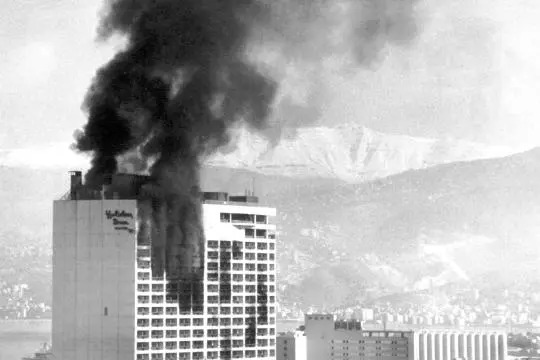
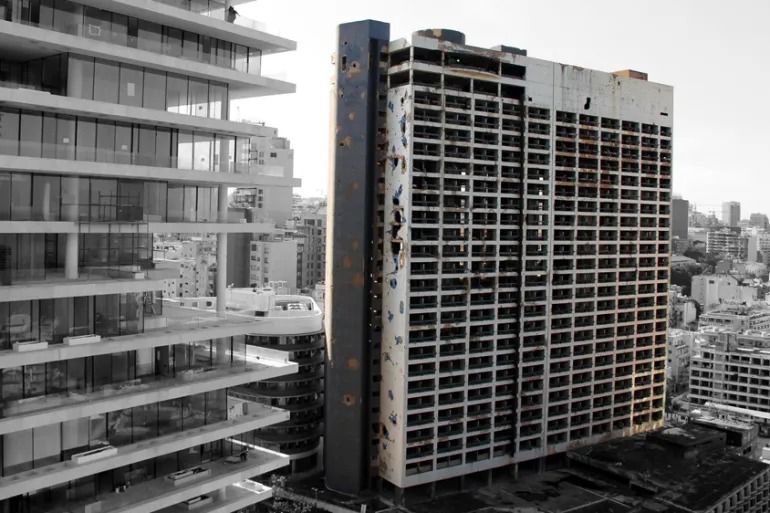
Since the 1960s, Beirut had drawn the world’s attention. It became “Sett Dounia,” as the poet Nizar Qabbani said. Kings and presidents, celebrities and wealthy elites, spies, tourists, and students all came to the city. It became a Suez Canal for foreign currencies, especially after Arab oil dollars found their way into its banks. It was not just that: many wealthy and middle-class people from Egypt and Syria, fearful of nationalization, moved there. Arab opposition politicians and intellectuals also sought refuge in the city. Luxury hotels appeared. While there had been only a few — most notably “Saint George” — the “Phoenicia Hotel” was built, followed by the towering “Holiday Inn” . Despite hotels spreading across new neighborhoods, this waterfront locality remained the crown jewel. But a Black Saturday during the days of the 1975 war brought misfortune to these hotels — and to the entire country. As the state weakened and the law of the jungle replaced the law, instincts ran wild. A father, whose son had been missing for months, found him murdered. Driven by revenge, he and several angry companions set up a checkpoint near the “Kataeb” headquarters in Saifi. They killed approximately two hundred citizens, most of them port workers, targeting them based on their identity. The perpetrator later narrated his story, saying, “I am the victim, and I am the executioner.” The “Kataeb” announced that undisciplined members had committed the revenge crime and affirmed that their leaders had tried to stop the tragedy. But his opponents, “the Lebanese National Movement” led by Kamal Jumblatt and the Palestinian factions, did not believe him. They accused him of orchestrating the massacre to provoke a sectarian reaction, Muslims against Christians. Determined to respond to Black Saturday, they launched the Battle of the Hotels . They chose this locality for two reasons : 1. The widespread presence of Kataeb members there, some of whom had turned the tall buildings, including the “Holiday Inn”, into military positions. 2. To prevent the “Kataeb” from reaching Hamra, where the Central Bank of Lebanon is located. “Kataeb” fighters retreated to their party headquarters in Saifi. The battle ended with the destruction and looting of the hotels, along with banks, shops, and homes in downtown Beirut. This sparked a chain of actions and retaliations including battles, massacres, kidnappings, and killings based on identity. Today, the locality is trying to reclaim its past, hoping to become an extension of its neighbor, downtown Beirut. Yet, despite the restoration of several hotels and buildings, the scars of war remain visible, especially in the “Holiday Inn”, which still stands as a reminder of the war and its consequences.