
“Saint George” and the Assassination of Hariri: The Power of Memory
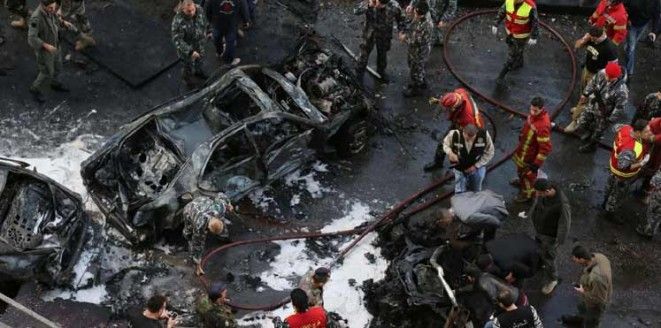
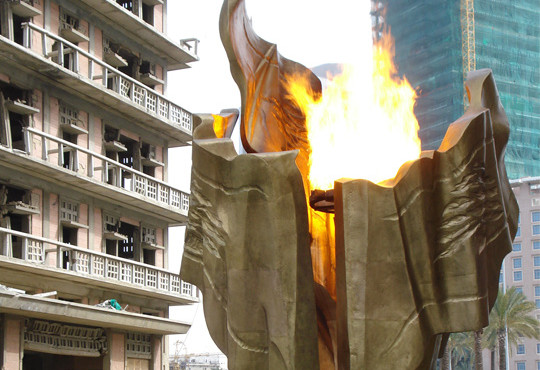
Here, Prime Minister Rafic Hariri was assassinated on the 14th of February 2005. Yet, despite the magnitude and tragedy of the event, the place is still known as “Saint George” , after the famous hotel. This tourist and architectural landmark, inaugurated in 1934 and designed by the engineer Antoine Tabet , and one of the city’s first concrete buildings, remains firmly in the city’s memory. Its image on the waterfront and its history as a beach and club for politicians, elites, celebrities, journalists, and a haven for spies were not erased by the war. It remained present, even though it was destroyed and left in the devastated ground separating West and East Beirut. And despite remaining closed after the war, as it was restored but its management clashed with the Solidere company over the exploitation of the waterfront, it continued to be one of the prominent markers of the past. “Saint George” remained for years the only luxury hotel in Beirut and was the star of postcards depicting the city’s waterfront. It became an image of prosperity and lavishness, standing in stark contrast to the economic and social conditions experienced by many in Lebanese regions and the belts of poverty around Beirut. However, the choice of this location for the assassination was not an act of revenge against the hotel. It was selected because it was along one of the routes taken by the convoy. Nevertheless, the assassination at this site symbolized Lebanon itself: like the “Saint George” Hotel, which had witnessed glory, was destroyed by war, and in times of peace could never return to its former state. The assassination, which killed and wounded many citizens and caused massive destruction in the surrounding area, shook all of Lebanon. In addition to being the peak of the wave of political assassinations that had forcefully returned during that period, it targeted Rafic Hariri himself, the man who represented the implementation of the Taif Agreement that ended the war, a figure of Arab and international relations, and a Lebanese leader . Despite all this, and despite the brutality of the assassination, the hotel insisted on reopening, even if only partially, as if to affirm that it does not resemble war or assassination, but rather resembles Lebanon itself and its ambitious and tormented generations.